Our story
Right.Fun.Theirs.
Steph makes it right. Dale makes it fun. Your kid makes it theirs.
Why wemade it.madeit.
A nutritionist and a play expert, both parents, who’d both found lunch still in the school bag one too many times.
Most lunchbox tools are either menus for grown-ups or sticker charts that pay out in lollies. One plans for kids. The other pays them to eat. Neither hands kids the box.
We wanted the opposite. Grown-ups choose the foods they have. Kids make the real decisions, do the real jobs and tell the truth about what came home, without anyone keeping count of what they ate.
Lunchtime, by the numbers
10
minutes, about what most Aussie kids get to sit and eat lunch.
74%
of teachers say lunch eating time is 15 minutes or less.
16%
of primary lunchboxes in one South Australian study had any vegetables.
Registered Nutritionist. Founder, Body Good Food.
“I want kids to feel capable around food, not watched.”
Steph Geddes
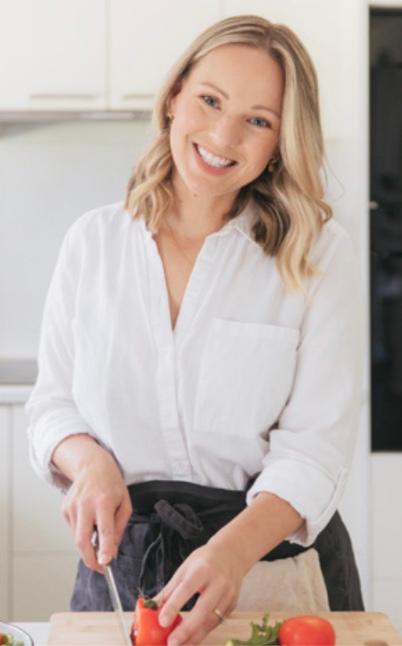
Steph is a Registered Nutritionist with a warm, realistic, non-diet approach and a background in culinary nutrition: food that tastes good and fits real family life. She built the five zones, Steph’s food library and Lunch School, and she signs off every food, every rule and every line kids hear about food.
- Registered Nutritionist, Nutrition Society of Australia
- Founder of Body Good Food, culinary nutrition
- Former Head of Nutrition, 28 by Sam Wood
- Mum of three boys in Melbourne
Founder, The School of Play.
“If kids aren’t having fun, they won’t come back. So lunch became something they lead.”
Dale Sidebottom
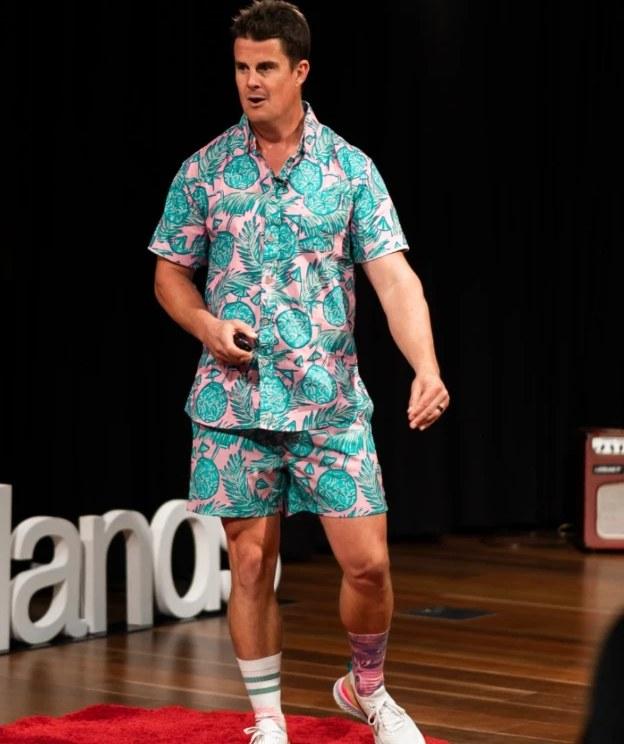
Dale founded The School of Play to bring play-based wellbeing into schools and workplaces. He designs the play: the builder, the optional Extras and everything kids touch, and signs off every card, character and story.
- Play programs in 600+ schools and organisations across 25+ countries
- Five La Trobe University studies of his programs since 2022
- TEDx speaker and co-host of Energetic Radio
- Author of All Work No Play, The Playful Astronauts and 365 Days of Play
- All Work No Play
- The Playful Astronauts
- 365 Days of Play
The Legends Promise
Today, and every day
Eight promiseswe keep.
The rules built into Lunchbox Legends, written down so you can hold us to them.
Signed off together. Steph and Dale sign off the Promise, and anything that touches how a child feels about food.
- No winning. No losing. Every answer is a good answer.If you switch on sparks, they come from building, packing, noticing and honest check-ins. No leaderboards, no comparing kids, and never amounts, speed or an empty lunchbox. Nobody is compared.
- “Not today” counts.Every taste moment has a “Not today, thanks” button that earns the same as trying. Just looking counts too.
- No counters, no “missed”, no deals.No streaks, no to-do counts and nothing ever marked missed. Rewards are surprises, never “eat this to get that”.
- Food stays neutral.No good or bad foods, and food is never a prize. Kids decide whether and how much they eat. No clean-plate rules.
- No villains made of food. No crossed-out food.Story characters are silly and friendly, never a food. Siblings are teammates and classes see totals only.
- Chance never decides what they eat.Spinners and dice only help kids decide. Free, fair, optional, and “not that one” is always welcome.
- No ads, nothing for sale to kids.Kid mode has no ads, prices, purchases, chat, external links or push notifications.
- Your family’s data is yours.Kids get a nickname and a Buddy, never a real name. Today it all stays on your device. Delete means delete.
Steph Geddes and Dale Sidebottom
What earns sparks,and whatnever does.neverdoes.
- We reward
- building and packing a box, helping shop, a mission, any tasting step (even just looking), “Not today, thanks”, and an honest check-in, “I was full” included.
- We never reward
- how much was eaten, how fast, a “clean” lunchbox, or picking particular foods. Every check-in answer, including “came home”, earns exactly the same.
- Your role
- You confirm packing and helping. You see what came home as your kid told it, never added up into a total, and there are no alerts about food that came home. You get “Say this, not that” lines instead.
Across 128 studies, expected rewards for performance lowered kids’ own motivation, while positive feedback raised it. Deci, Koestner and Ryan, 1999
I looked at the snow peas. Not today, thanks.
Looking counts. So does “not today”. Same sparks as a taste.
Most of my lunch came home today.
Thanks for telling me. Same sparks as any answer.
Chance helps them decide.It never decides what they eat.
The optional Extras include a spinner, dice, cards and cups, because a little chance helps kids who freeze when choosing. Every chance tool follows these rules.
We do
Let chance help them decide.
We never
Let chance decide what they eat.
Every chance tool follows these nine rules
Only foods you approved. Two to six options, from My kitchen, with allergies removed.
Fair and visible. Every option is shown first and gets an equal slice or face.
Optional. Picking for yourself is the default. “Help me pick” is a choice.
Reversible. Spin again as often as you like. “Not that one” is always allowed and praised as great deciding.
Never about eating. Chance can pick what to pack, how to explore a food, a movement or a thank-you. Never “eat this”.
Stakes-free. No sparks, coins or prizes from a spin, and nothing to buy.
No near-miss tricks. No slow-down teases, no “so close!”, no showing what you could have won.
Not logged. We don’t record what the spinner landed on.
Sensory-safe mode. For kids who need predictability, chance only ever lands on known foods or gentle ways to explore.
On surprises. From week 4, a surprise card sometimes appears after a check-in, for checking in, never for eating. Unexpected rewards like this don’t harm kids’ motivation the way expected ones can.
Privateby design.bydesign.
Only about 1 in 5 apps used by 3 to 5-year-olds had no manipulative design. We intend to be one of them. Radesky et al., JAMA Network Open
In schools, totals only. Teachers see the shared class garden and class totals. Never which child ate what. If fewer than 5 families have joined a class, no numbers are shown at all. Families opt in to each class separately.
Your family’s data (draft)
- What we keep about a child.A nickname, a Buddy and an age band, plus what the app needs to work for them: allergies, foods they like, their lunchbox, the boxes they pack, their check-ins and Lunch School progress. No real name, photo, birthdate, email, voice recording or location.
- Today, it stays on your device.The iPhone and iPad app (in testing) has no accounts and no sign-in, and keeps everything on the device. The web app is a demo for now and keeps everything in your own browser.
- Coming: family accounts on the web.Web accounts aren’t open yet. When they open, a parent holds the account and children get a profile, not an account. Your family’s details are then kept in our database so they follow you across devices.
- Coming with accounts: your OKs, your copy.Each OK is asked for separately, never pre-ticked, and lasts 12 months. Save a copy of your family’s data any time, or delete a child or the whole family for good, with no “de-identified” copies kept.
- Food data is treated as sensitive.Allergies are used only to filter My kitchen and the builder. Food data is never sold, shared or used for marketing.
- Kids are told too.The Buddy tells kids, in their words, that their grown-up can see their lunch stickers.
- No kids’ data on this website.The early list collects grown-ups’ details only.
Delete means delete.
Where we’reup to.upto.
Built
Built and in testing.
My kitchen, the ready-made box, packing, What came home, real lunchboxes, Lunch School with Steph and the optional Extras. On iPhone, iPad and the web.
Next
Steph’s sign-off.
Steph reviews every food, rule, lesson and line before families see it.
Then
The early list opens.
Join the early list and we’ll email you when it opens.
2027
A school pilot.
Lunchbox Legends Week with a small group of schools, in a school pilot in 2027.
We’re building to the draft of Australia’s Children’s Online Privacy Code, which must be registered by 10 December 2026. We don’t claim certification. We’ll check every commitment against the final Code, do a privacy impact assessment before launch, and publish what we find here.
When can we start?
Sign-ups aren’t open yet: they open once Steph has signed off every detail. Join the early list and we’ll email you when it opens. Until then, the free printable kit works on paper.
iPhone, iPad or web?
All three. There’s an iPhone and iPad app, in testing now and not yet on the App Store, and a web app that runs in any modern browser. It’s for families in Australia and New Zealand.
What ages is it for?
Ages 3 to 12, in three bands: 3 to 5, 6 to 8 and 9 to 12. The app changes its look and its words with your child’s age.
How much time does it take me?
Set up My kitchen once by ticking the foods you usually have. After that it’s a few seconds a day to check the box. Your kid does the rest.
Won’t my kid just pick the Bonus food?
They only ever build from the foods in My kitchen, so every option is one you’re happy with. The Bonus is one small optional extra, and it’s never a prize for eating something else.
What if the food comes home?
That’s useful information, not a problem. Every answer counts the same, so kids tell you the truth. Lunch School has a whole lesson on it.
Does it handle allergies?
Yes. Nut-free is on by default, and any allergy you add takes those foods out everywhere. It’s general guidance, not medical advice.
Is it competitive?
No. No winners. No losers. No leaderboards, no tallies and no comparing kids. Siblings are one team, classes see totals only, and every answer is a good answer. Steph checks every reward rule for pressure before it reaches your kid.
Won’t rewards pressure my kid?
They’re built not to, and they’re optional. Sparks are an Extra you switch on, and they come from curiosity, honesty and doing real jobs, never from eating. No winning, no losing: every answer is a good answer. There are no streaks or counters, and Quiet mode switches sparks off altogether.
What if my child doesn’t try anything?
That’s completely fine, and it still counts. Every taste moment has a “Not today, thanks” option that earns the same as trying, and just looking at a food is a full step. Nothing is marked as missed. Keep offering, keep it calm and let them lead.
Can grandparents or another household help?
Yes. Lunch School builds a Lunch Card with your child’s safe foods, what helps and the words you use at home. Share it with anyone who packs the box, so every box feels the same.
What do you know about my kid?
A nickname, a Buddy and an age band, plus their allergies, the foods they like, their lunchbox and their check-ins, so the app works for them. Today it all stays on your device: the iPhone and iPad app has no accounts, and the web app is a demo that keeps everything in your browser. No real name, photo, birthdate or email. More in the Legends Promise.
Is it free?
It’s free to start, and kids never see a price. See pricing.
Can my school take part?
We’re planning a school pilot in 2027 with a small group of schools. Register on the schools page.
Want toplay along?playalong?
Join the early list and we’ll email you when it opens.