Lunch School with Steph
Calm lunchesstart with you.startwith you.
Seven short lessons for the grown-up who packs the box, by Registered Nutritionist Steph Geddes. Each takes 3 to 5 minutes and ends with one small thing to do. Nothing to get right, and nothing to study.
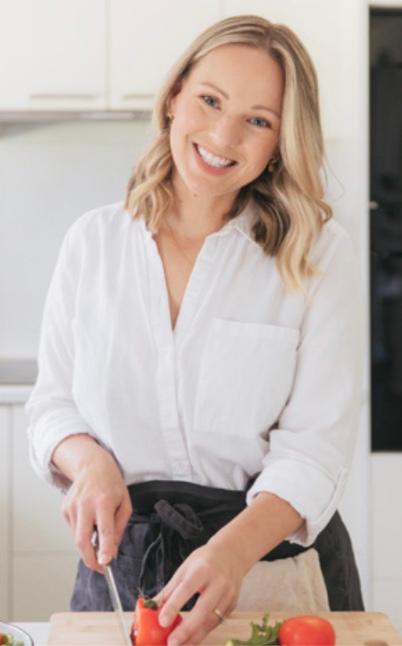
“I want kids to feel capable around food, not watched.”
Seven lessons
Seven lessons.About four minutes each.About fourminutes each.
We suggest them one at a time, in order, and each one is about your child. Curious about a later one? Every lesson is there to read whenever you like.
Why your child builds the box
4 min
Why a real say in lunch tends to help.
Then: Ask what they’d love in their box this week.
Your job, their job
4 min
My kitchen is your job. The box is theirs.
Then: Open My kitchen and tick what you have.
Calm over clever
5 min
Thank the joining in, not the eating.
Then: Say one calm line at the next meal.
Food coming home is information
4 min
Look at a week, not a day.
Then: When food comes home, say “Thanks for telling me.”
New foods, one look at a time
5 min
Many calm meetings, on the side, next to a safe food.
Then: Put one new food on the table, with no asking.
Enough is enough
4 min
Balance is a week, not a box.
Then: Say nothing about an empty space in the box.
Rough days and the long game
4 min
Rough mornings happen. Coming back together is what counts.
Then: Share the Lunch Card.
The Lunch Card
One card for anyonewho packs the box.who packsthe box.
Your answers along the way build your child’s Lunch Card: the foods they reach for, the ones they’re getting to know, what makes lunch hard, what helps, and the calm words you use at home. Share it with a grandparent, a carer or the other household, so every box feels the same.
It never carries how much was eaten, or anything about health or bodies. It leaves your device only when you share it.
Your teacher
Steph Geddes
Registered Nutritionist. Founder, Body Good Food.
Steph is a Registered Nutritionist with a warm, realistic, non-diet approach and a background in culinary nutrition: food that tastes good and fits real family life. She’s a mum of three boys in Melbourne, and she signs off every food, every rule and every line kids hear about food.
- Registered Nutritionist, Nutrition Society of Australia
- Founder of Body Good Food, culinary nutrition
- Former Head of Nutrition, 28 by Sam Wood
Steph’s review is under way. Every rule and every lesson is marked draft until she approves it.
Our story- Classic 3-section
- 5-compartment bento
- Box with a dip pot
Five zones,plus water.pluswater.
The app’s own simple way to sort a lunchbox: colours and shapes kids can read before they can read. It isn’t official dietary advice or the five food groups. Every real lunchbox maps its sections to the zones.
- PowerThe main: bread, wraps, rice, pasta, crackers or leftovers, usually with a filling.Examples: wholemeal sandwich, rice paper roll.
- CrunchVeg, raw or cooked, plus legumes.Examples: carrot sticks, edamame.
- JuicyFruit: fresh, frozen or tinned in juice.Examples: mandarin, kiwi fruit.
- StrongDairy, eggs, tofu and dips, like yoghurt, cheese and hummus.Examples: yoghurt, boiled egg.
- BonusAn optional extra, if you like. Never earned, never a prize.Examples: popcorn, a homemade biscuit.
- Water.Every box has a bottle.
A box never has to be full. A section left empty is fine, and a week matters more than a day.
Food stays neutral.Everyone has a job.
Steph’s stance is simple: there are no good or bad foods here, nobody is pushed, and kids decide whether to eat, and how much.
Your job
What, when and where.
You choose what’s in My kitchen, when lunch is packed and where it’s eaten. Every food in your kitchen is just food: none has to be earned, and none is a prize.
Their job
Whether, and how much.
Your kid decides whether to eat, and how much. Nobody counts bites, “I was full” is a fine answer, and every answer is a good answer, eaten or not.
Crunchy at lunch.Curious at home.Curiousat home.
How we talk about food matters as much as the food.
What kids hear
- While building: how food looks and feels. “Snappy veggies live here.”
- In learn moments (7+, away from lunch): what food helps you do.
- At lunch: play and senses only. “How loud is your crunchiest thing?”
What kids never hear
- Labels like “healthy”, “junk”, “good” or “bad” food
- Numbers: calories, grams, portions, how much was eaten
- Anything about bodies or size
- Pressure: “one more bite”, “finish it”, “you have to try”
Told a food would make them strong, 3 to 5-year-olds ate about half as much of it. Maimaran and Fishbach, 2014
Every child, their own setup
Every childgets theirown setup.
A nickname, an age band, their own allergies, likes and dislikes, their real lunchbox and their school day. Then every section of the box suggests foods and Steph’s recipes that fit them.
Allergies sit out quietly. Nut-free is on by default. Foods with that allergen leave My kitchen, the builder, the Extras and the suggestions, and your kid hears “This one is sitting out today”, never the allergen.
Their school day. Recess and lunch are separate breaks in the same box. Tick Crunch&Sip if their school runs it. On nude food days, wrapped foods move to the back.
Suggestions that fit. Likes come first. A food they don’t like yet is never first and never forced.
Every piece is tagged against Australia’s Plain English Allergen Labelling list. General guidance, not medical advice: always follow your child’s allergy action plan and your school’s policy.
What theresearch says.researchsays.
Repeated, calm meetings help kids come to like new foods.
What we do: Taste moments and the food cards, both optional Extras, where looking counts.
Rewards for eating backfire on kids’ own motivation.
What we do: nothing ever rewards eating or how much. Every check-in answer counts the same.
“It’s good for you” backfires too.
What we do: sensory words at lunch, “why” only in learn moments.
Kids accept new food more readily when they chose it.
What we do: kids build the box; chance only helps them decide.
Grown-ups choose what, when and where. Kids choose whether, and how much.
What we do: you choose what’s in My kitchen, your kid builds the box, and nothing ever rewards how much was eaten.
Kids get about 10 minutes to eat.
What we do: “ran out of time” is an honest answer, and Steph’s tips favour quick-to-eat shapes.
We don’t promise your kid will eat everything. We promise calmer lunches, real choices and a lot more joining in.
Join theearly list.
Accounts aren’t open yet. Join the early list and we’ll email you when it opens.
Join the early list